Gundicha Temple, Puri — History, Rath Yatra Connection & Best Time to Visit
Gundicha Temple, located in Puri, Odisha, is one of the most important temples connected with Lord Jagannath and the annual Rath Yatra. Situated at the opposite end of Puri’s Bada Danda (Grand Road) from the main Jagannath Temple, it becomes the temporary destination of Lord Jagannath, Lord Balabhadra and Devi Subhadra during their annual chariot journey. An Odisha Review article places the temple about 3 km from Sri Jagannath Temple, connected by the Grand Road used during Rath Yatra.
The temple is sometimes described as the Garden House of Lord Jagannath, since its complex is surrounded by a garden — but during the annual festival, it becomes the centre of one of the most important stages of the Jagannath ritual calendar, when the deities leave their permanent home and stay here before returning to the main shrine.
History & Origins
The history of Gundicha Temple is closely connected with the older religious traditions of Puri and the Jagannath cult, but different accounts explain its origin in different ways — traditional stories are worth distinguishing clearly from documented historical evidence.
According to an Odisha Review account, the popularity of the Gundicha Yatra goes back in traditional literature to texts including the Brahma Purana, Padma Purana, Skanda Purana and Kapila Samhita. The same source explains that the term “Gundicha Yatra” is commonly used for the Ratha Yatra itself.
The temple’s name is most popularly traced to a story about how the wooden deities themselves were made. According to this tradition, King Indradyumna — having recovered the sacred Daru log associated with Lord Vishnu — brought in a mysterious elderly carpenter, said to be the divine architect Vishwakarma in disguise, to carve the deities from it. Vishwakarma set one condition: he would work behind closed doors for twenty-one days, undisturbed. When no sound had come from the workshop for two weeks, the king’s queen, Gundicha, grew anxious that the old craftsman might have died of hunger or thirst, and convinced her husband to open the doors early, on the fourteenth day. Inside, they found the carpenter gone and three unfinished wooden forms — armless, legless, with large round eyes — left behind. According to the tradition, Lord Jagannath later told the king in a dream that this raw, unfinished form was exactly how he wished to be worshipped. Because it was Queen Gundicha’s concern that led to the deities being found in this form, the site was named for her. This is a devotional legend explaining the temple’s name and the deities’ distinctive appearance, not a historical record.
Another historical interpretation considers the possibility that the area now associated with Gundicha had older religious significance before the development of the great medieval Jagannath Temple. An Odisha Review research article suggests the area may have had connections with an earlier wooden deity tradition, while also noting uncertainties about the exact development of the early Ratha Yatra. So when it comes to the temple’s early history, it’s better to say “according to tradition” or “some historical interpretations suggest” than to present any one origin story as proven fact.
What Does “Gundicha” Mean?
Beyond the Queen Gundicha story, historians and linguists have offered other explanations for the name, none of which cancels out the others — they’re better read as different lenses on the same word:
- Tribal roots: The Jagannath cult has well-documented links to Odisha’s Sabara (tribal) communities. In some older regional dialects, “Gundi” is said to mean a raw log or tree trunk — fitting, given that the deities were carved from one, and suggesting an early meaning closer to “the pavilion of the sacred log.”
- A folk healing deity: A separate regional tradition connects the name to “Gundi” or “Guti,” old Odia/Bengali terms for smallpox pustules, and to a local protective mother-goddess invoked against the disease. One interpretation holds that as Vaishnavism absorbed older local cults, this folk healing deity was gradually reimagined as Jagannath’s maternal aunt (Mausi Maa) — whose garden home offered relief and coolness during the harsh summer months when the festival falls.
These are best understood as layered, overlapping traditions rather than a single settled etymology.
Gundicha Temple and Jagannath Temple
The physical relationship between the two temples is central to understanding Rath Yatra. The Sri Jagannath Temple is the permanent home of the deities, while Gundicha Temple becomes their temporary residence during the annual journey. The two temples sit at opposite ends of the Bada Danda, creating the ceremonial route followed by the three chariots — a journey that transforms the Grand Road into the principal public space of the festival.
This relationship gives Gundicha Temple an importance that goes beyond its size. For most of the year the temple is comparatively quiet; during Rath Yatra, it becomes the destination of the most famous pilgrimage procession in Odisha.
Why the Deities Go to Gundicha Temple
According to the traditional Jagannath festival narrative, Lord Jagannath, Balabhadra and Subhadra leave the main temple during Rath Yatra and travel to Gundicha Temple. Odisha Tourism describes Gundicha Temple as the destination of the chariot journey and notes the traditional belief that it is associated with the birthplace of Lord Jagannath; the deities stay there before beginning their return journey, the Bahuda Yatra. Another Odisha Tourism account describes the journey as a visit to Gundicha, traditionally understood as the Lord’s aunt’s home — part of the living religious narrative surrounding the festival.
The journey isn’t simply a procession from one temple to another — it represents the public appearance of the deities and forms the central ritual movement of Rath Yatra.
Chaitanya’s Gundicha Marjana
The day before Rath Yatra, the temple is prepared through a ritual known as the Gundicha Marjana — a thorough cleaning of the temple grounds that, according to the Chaitanya Charitamrita (Krishnadasa Kaviraja Goswami’s biography of the saint), was given its present devotional character by Sri Chaitanya Mahaprabhu during his years in Puri.
Tradition holds that Chaitanya and his followers would gather at the temple with brooms and water drawn from the nearby Indradyumna Tank, scrubbing the Vimana, Jagamohana and courtyards clean by hand. He is said to have taught that the physical cleaning was also a spiritual exercise — that washing away the temple’s dust was a way of washing away the ego and attachments of the devotee’s own heart, making it a fitting place for the Lord to reside. The Gundicha Marjana is still observed today by temple servitors and Gaudiya Vaishnava communities ahead of the festival.
Gundicha Temple During Rath Yatra
The connection between Gundicha Temple and Rath Yatra unfolds as a sequence of events:
1. Pahandi — The festival begins with the ceremonial movement of the deities from the main temple. During Pahandi, the deities are carried in a distinctive rhythmic procession toward their respective chariots.
2. The Three Chariots — the deities travel along the Bada Danda toward Gundicha Temple on three separate chariots:
| Deity | Chariot |
|---|---|
| Jagannath | Nandighosha |
| Balabhadra | Taladhwaja |
| Subhadra | Darpadalana |
3. Chera Pahara — Another important ritual, in which the Gajapati Maharaja ceremonially sweeps the chariot platforms. Odisha Tourism presents this as a symbolic expression of humility before Lord Jagannath.
4. Arrival at Gundicha — Once the chariots reach the Gundicha area, the deities are ceremonially taken into the temple. An Odisha Review account describes the deities being worshipped at Gundicha and remaining there for approximately seven days before the return journey.
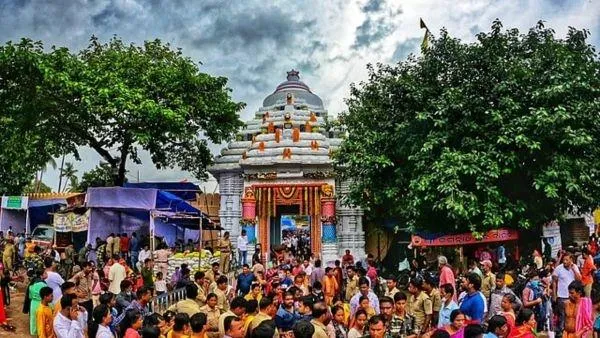
5. Aadapa Mandapa — During their stay, the deities are worshipped at the Aadapa Mandapa inside Gundicha Temple. Odisha Tourism describes the offerings made during this period as Aadapa Mandapa Mahaprasad — one of the reasons Gundicha Temple becomes particularly sacred during this window.
6. Hera Panchami — On the fifth day of the deities’ stay, a distinctive ritual known as Hera Panchami is observed, built around a devotional narrative involving Goddess Lakshmi, Lord Jagannath’s consort, who stays behind at the main temple. According to the story, Lakshmi grows impatient waiting for the Lord’s return and travels to Gundicha Temple in a palanquin procession to confront him, but is only permitted to view him from a side entrance rather than the inner sanctum. As a symbolic gesture of her displeasure, her attendants are said to break off a small piece of the Nandighosha chariot before she returns to the main temple. It’s a ritual drama rather than a literal historical event, and one of the more theatrical, human-scale moments in the festival calendar.
7. Bahuda Yatra — After the stay at Gundicha Temple, the deities begin their return journey to the main Jagannath Temple. The festival sequence then continues with rituals including Suna Besha, Adharapana and finally Niladri Bije, when the deities return to the main temple.
Periods of Crisis
Beyond its yearly festival role, the Madala Panji chronicles and later historical accounts describe Gundicha Temple’s isolated, garden-enclosed setting occasionally serving a more defensive purpose. Odisha’s temples, including the wealth-rich Jagannath Temple, faced repeated iconoclastic threats between the 14th and 18th centuries, including campaigns associated with the Bengal Sultanate general Kalapahad and later Mughal-era raids. According to these accounts, priests would at times move the wooden deities out of the main temple under cover of night, using the Bada Danda route past Gundicha toward more remote hiding places, including areas near Chilika Lake, before conditions allowed their return. This is a tradition recorded in later chronicles rather than something that can be independently verified in detail, but it reflects the real, recurring threats Odisha’s temples faced across these centuries.
Temple Architecture
Gundicha Temple follows the Kalinga style of temple architecture. While simpler structures are believed to have stood on the site earlier, epigraphic evidence points to a major rebuilding in the 12th century under King Anantavarman Chodaganga Deva — the same Eastern Ganga ruler credited with the main Sri Jagannath Temple. An Odisha Review article describes four principal structures within the complex:
- Vimana — the sanctum structure
- Jagamohana — the assembly hall
- Natamandira — the hall associated with ritual activities
- Bhogamandapa — the offering hall
The complex also includes a kitchen area and is enclosed by a surrounding masonry wall, reported at roughly 20 feet high and 5 feet thick — substantial enough to have doubled as a defensive structure during periods of regional conflict, in addition to sheltering the temple’s garden from coastal winds. Unlike the main Jagannath Temple, the Gundicha complex has a strong garden setting — coconut, mango, neem and other trees are traditionally associated with the garden surrounding the temple, contributing to its description as the Garden House of Lord Jagannath.
The temple has multiple entrances tied to the deities’ movement during Rath Yatra. The Odisha Review account identifies the western gate as the Lion’s Gate, through which the deities enter during Rath Yatra, and the eastern gate as the Nakachana Gate, used for their departure, along with a northern gate. These entrances matter particularly during the festival, since the deities’ movement through the temple is itself part of the ritual sequence.
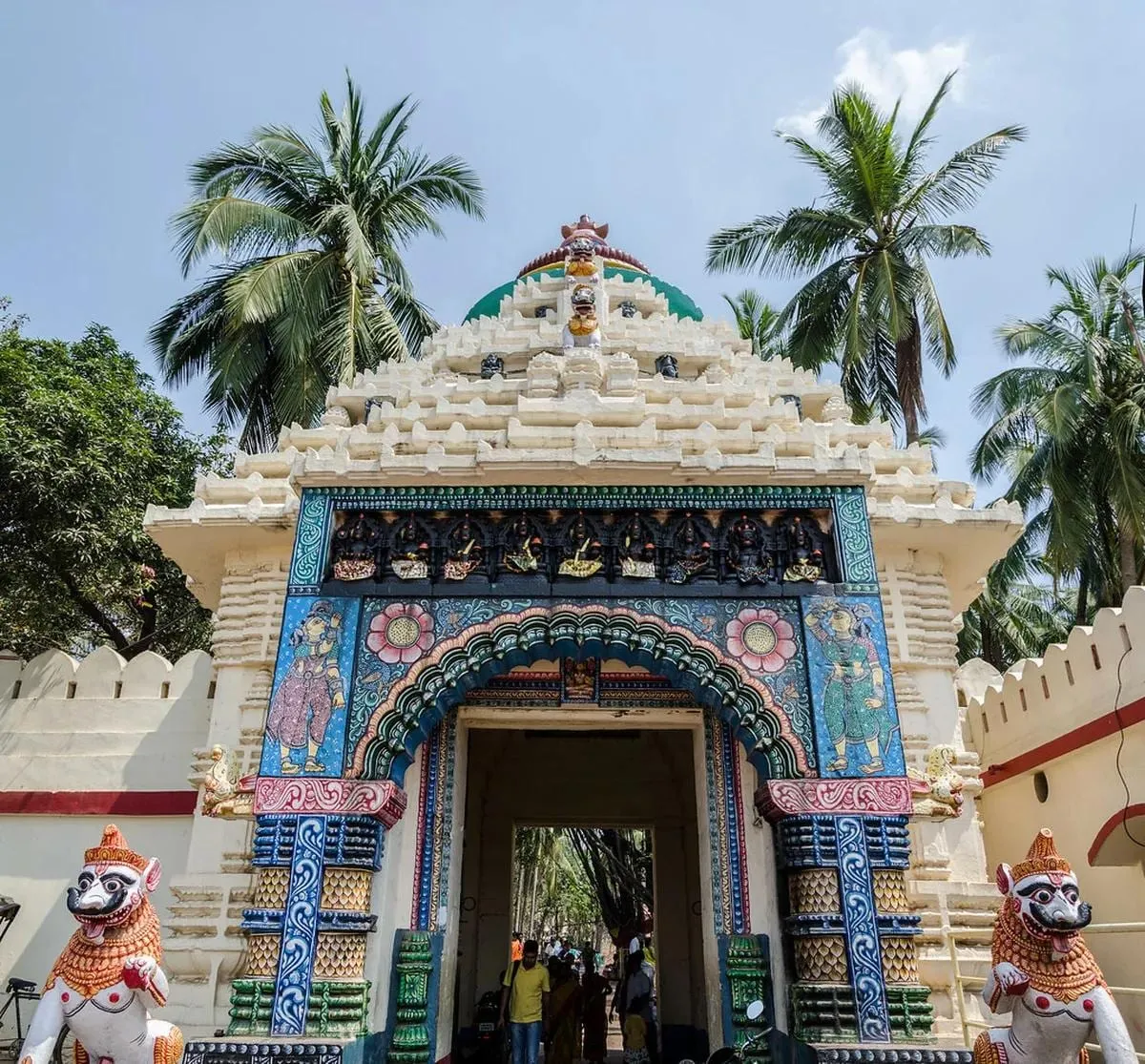
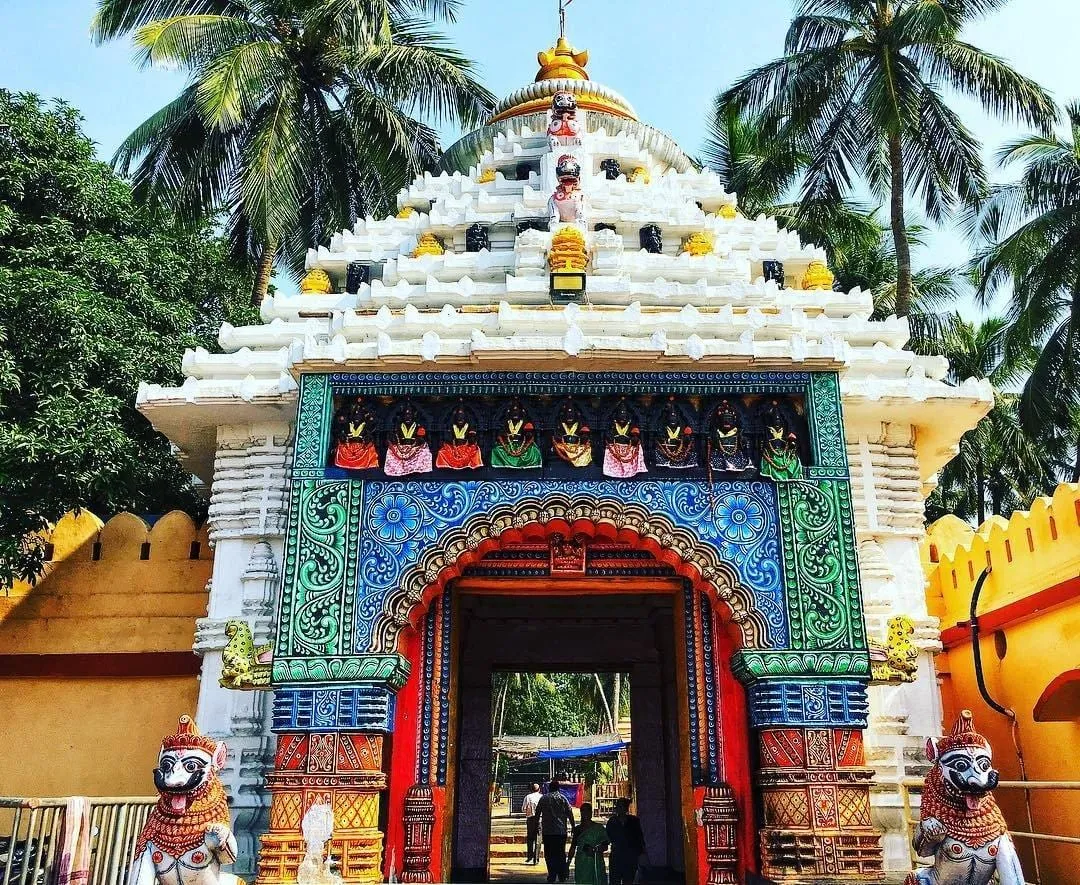
Today the temple is maintained jointly by the Shree Jagannath Temple Administration and the Archaeological Survey of India, with ongoing conservation work needed to protect its sandstone structures from the corrosive, salt-laden sea air off the Bay of Bengal.
Open to All
The main Sri Jagannath Temple maintains a longstanding rule restricting entry to Hindus only. Gundicha Temple takes a different approach for most of the year: outside the Rath Yatra festival period, its courtyards and halls are open to non-Hindu visitors, tourists and scholars who want to view its architecture and the Ratnavedi platform up close — one of the more accessible ways to experience a Jagannath-cult temple’s interior directly. During Rath Yatra itself, the public nature of the chariot procession and the temple’s open courtyards mean the festival is, in practice, one of the more universally accessible moments in the Jagannath tradition, regardless of caste or faith.
Best Time to Visit
The best time depends on what you want to experience.
For the Rath Yatra experience: If your main purpose is to experience the historic connection between Gundicha Temple and Lord Jagannath’s chariot journey, the most significant period is Rath Yatra in June or July, per the Hindu lunar calendar — Odisha Tourism states that Ratha Jatra falls on the second day of the bright fortnight of Ashadha, generally during June/July. This is when Gundicha Temple becomes the destination of the three chariots and the deities stay there during their annual sojourn. It’s also the busiest period in Puri, with very large crowds, so plan accommodation and transport well in advance.
For a quieter visit: For travellers who want to explore the temple surroundings in comparatively more comfortable weather and without the enormous Rath Yatra crowds, October to April is generally a better period for visiting Puri — the Government of Odisha’s Puri tourism information identifies this window as the best general period to visit because of the city’s climate. It’s also a good stretch for combining Gundicha Temple with other Puri attractions such as Jagannath Temple, Puri Beach and nearby heritage sites.
| Experience | Recommended period |
|---|---|
| See the Rath Yatra connection | June/July — Ashadha |
| See the chariot journey to Gundicha | Rath Yatra day |
| Experience the deities’ Gundicha stay | Rath Yatra festival period |
| Explore Puri more comfortably | October–April |
| Combine Puri with Konark and other attractions | October–April |
Daily Timings (outside festival season): Regular visiting hours are 6:00 AM to 3:00 PM and 4:00 PM to 9:00 PM (early mornings from 6:00 AM to 8:00 AM are best for a calm visit). There is no entry fee.
Plan your visit